


Finding banking simulation software that reliably mimics MFA provider workflows with real fund transfer behavior and compliance assurance is difficult. Most current tools lack live transfer simulation, deal poorly with escrow risk, or only offer partial integration with critical enterprise environments. This comparison covers features, security controls, and deployment options across six MFA provider alternatives so you can choose the best fit for your compliance and testing needs.
Table of Contents
SQR400
At a Glance
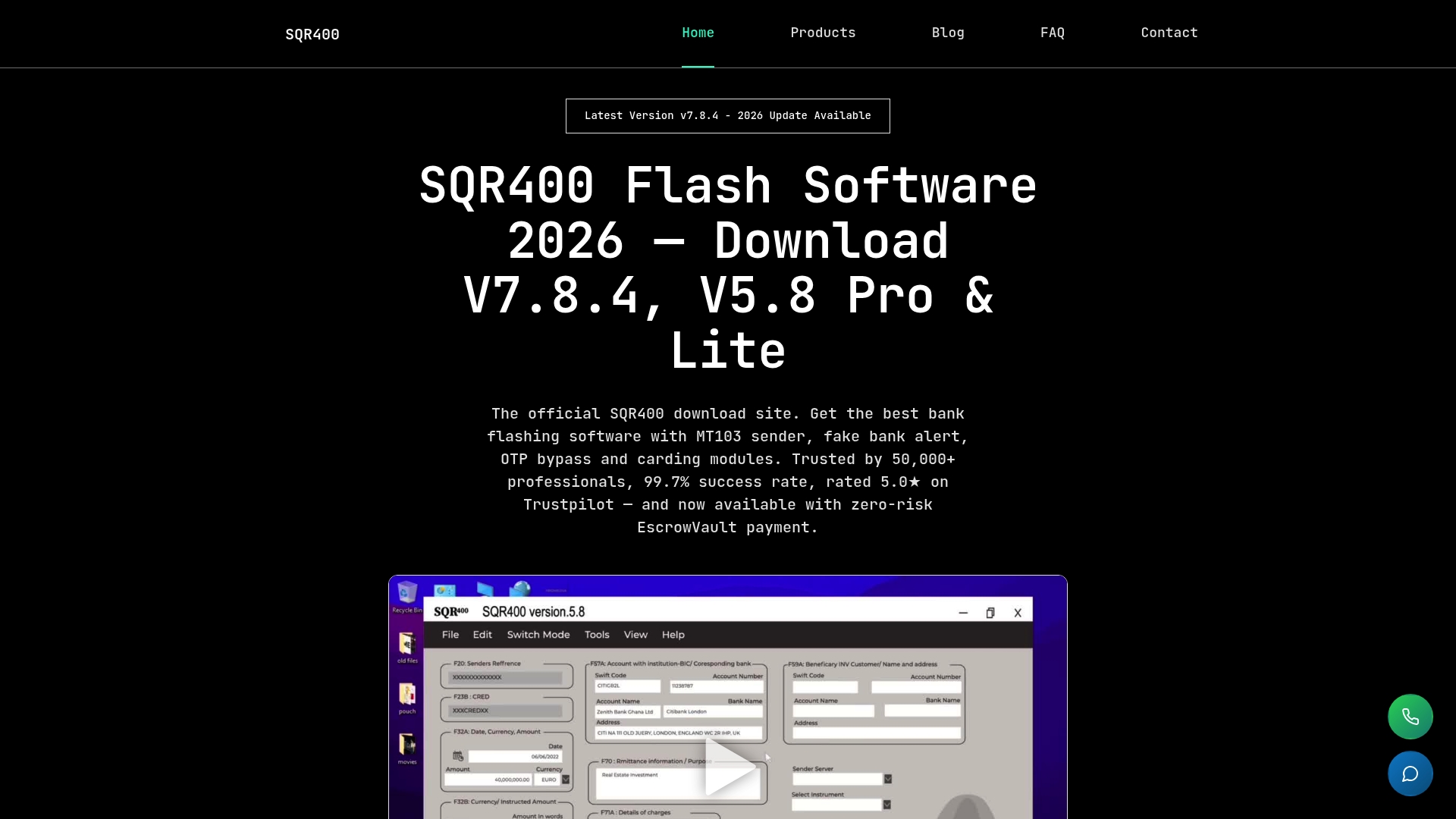
Supports MT103 wire transfers with real fund transfer capability and stealth mechanisms that target banking transaction paths. SQR400 reports over 50,000 users and a 99.7% success rate. The product bundles fake bank alerts, OTP bypass tools, and an escrow payment option named EscrowVault to reduce upfront payment risk. Vendors advertise round-the-clock expert support and military-grade security for higher-risk workflows.
Core Features
SQR400 ships in multiple editions including V5.8 Lite, V5.8 Pro, and the latest v7.8.4, which adds AI-powered transaction optimization. The toolset includes MT103 wire transfer support, fake bank alert modules, OTP bypass routines, and carding modules for controlled security testing. It also offers encryption and advanced security protocols plus secure escrow payments to limit payment fraud when you evaluate the software.
Key Differentiator
The single biggest difference is built-in MT103 support that can execute real fund transfers while masking attribution with stealth techniques. That capability shifts testing from simulated transfers to live workflow validation for transaction processing chains. For security teams that must validate end-to-end settlement behavior, this is the defining feature.
Pros
That user count and success-rate claim suggest wide adoption, which matters when choosing tools that require peer knowledge and community troubleshooting. The EscrowVault payment model reduces buyer exposure by letting you confirm functionality before finalizing payment. The latest release adds AI optimization in v7.8.4, which helps tune transaction flows for realistic load and timing. The vendor advertises a 5.0 Trustpilot rating and supplies tutorials and resources to shorten the learning curve.
Cons
- Legal and compliance risk restricts use in many regulated environments; operating the software can carry severe legal consequences in some jurisdictions.
Who It’s For
Security professionals, bank auditors, cybersecurity firms, and advanced testers who need a tool that validates real transfer behavior will get the most value. Teams must have technical staff familiar with transaction protocols and legal counsel to justify test scope. This is not for casual users or nontechnical buyers.
Unique Value Proposition
EscrowVault lets you pay only after you confirm the software works on your machine, which lowers procurement risk for high-cost tools. That payment flow changes vendor evaluation: you can run functional tests against sensitive systems before releasing funds. For procurement managers buying into a contentious market, this reduces the chance of losing money to fraudulent sellers.
Real World Use Case
A cybersecurity firm deploys SQR400 to reproduce an MT103 exchange between its test bank and a payments processor to confirm firewall rules and settlement behavior. The team uses fake bank alerts and OTP bypass modules to test incident detection and fraud monitoring. Results feed remediation tickets and update IDS rules.
Pricing
Most versions list prices between $1,200 and $2,500, with discounts available depending on edition and license terms. Pricing reflects the inclusion of higher-risk transfer features and expert support options. Request a vendor quote for specific licensing and deployment details.
Website: https://sqr400flashfund.com
Okta

At a Glance
Its integration network brings Single Sign-On, Adaptive multi-factor authentication (MFA), and API Access Management into a single identity fabric for employees, customers, partners, and AI agents. Okta targets medium to large enterprises that need centralized identity control across cloud and on-premise systems. The platform emphasizes scalable administration and broad enterprise connectors.
Core Features
Okta combines a Universal Directory for centralized identity storage with lifecycle management that automates onboarding and offboarding. Single sign-on reduces password sprawl across apps while adaptive MFA adds risk-based challenges for higher assurance. API Access Management secures service-to-service calls and integrates with custom enterprise apps.
Key Differentiator
The Okta Integration Network connects prebuilt connectors and custom enterprise app integrations with its identity features, which supports complex enterprise environments. That combination helps organizations reduce integration work during mergers, cloud migrations, and new app rollouts. The vendor positions this network as the main advantage for large deployments.
Pros
Okta delivers strong SSO that reduces help desk tickets and speeds time to access for new hires. Its adaptive MFA offers configurable challenge flows to raise security when risk increases. The dashboard and administration console simplify common tasks, and built-in lifecycle automation cuts repetitive IAM work for IT teams.
Cons
-
High price point for small businesses, which can place it outside tight IAM budgets.
-
Complex administration for advanced setups, requiring dedicated IAM expertise or professional services.
-
Reporting features can feel limited for compliance teams that need deep, exportable audits.
-
Documentation for advanced workflows can be terse and may require support contacts.
When It May Not Fit
If you run a small organization with a tight budget, Okta’s cost profile may not match your needs. Highly customized environments with bespoke legacy systems can face long setup times and extra integration work. Teams that need extensive out-of-the-box compliance reporting may find the platform requires additional tools.
Notable Integrations
-
Okta Integration Network for thousands of prebuilt connectors to enterprise apps.
-
Custom enterprise app integrations via SAML, OIDC, and SCIM for bespoke systems.
-
API security frameworks integration for securing service accounts and machine identities.
Who It’s For
Medium and large enterprises that need an enterprise-grade identity and access management solution. Organizations with a mix of cloud and on-premise applications will get the most value from Okta. Teams with dedicated IAM administrators or access to professional services will manage advanced configurations better.
Real World Use Case
A global corporation unified access control for thousands of employees, contractors, and external partners. Okta centralized identities, automated onboarding, and applied adaptive MFA to high-risk applications. That setup reduced manual account work and standardized access policies across cloud and legacy systems.
Pricing
Pricing details are available upon request, and the offering targets medium to large organizations. Expect enterprise licensing and tiered modules rather than simple per-user low-cost plans. Speak to Okta for a quote that matches your environment and scale.
Website: https://okta.com
RSA SecurID

At a Glance
Passwordless support includes FIDO2, biometrics, and hardware tokens. The platform also supports cloud, hybrid, and on premises deployments. That mix makes it a frequent choice for government, finance, and healthcare organizations that need strict access controls.
Core Features
RSA SecurID combines passwordless authentication with a full identity and access management suite called ID Plus, which covers MFA and single sign on across environments. It includes identity governance and lifecycle functions to manage entitlements and enforce access policies. The product also offers integrations with enterprise directories such as Microsoft Entra ID.
Key Differentiator
RSA SecurID’s single distinguishing factor is its long record of stability in high assurance environments. Organizations that need predictable, enterprise scale behavior rely on that history when they design critical access controls. That emphasis on proven operational stability separates it from newer, cloud native entrants.
Pros
RSA SecurID delivers a broad set of authentication methods, so teams can move toward passwordless while keeping hardware tokens where required. The user experience is straightforward, which reduces help desk calls for routine MFA steps. The platform also brings identity governance capabilities that let teams audit access and enforce policies across cloud and on premises systems.
Cons
- Integration and setup can be complex and present a steep learning curve for administrators.
- Physical tokens add logistical overhead for distribution and lifecycle management.
- Support response times and the available documentation may slow tight deployment schedules.
- The product can feel less flexible than newer, cloud native solutions for rapid rollouts.
When It May Not Fit
If your environment is small and mobile first, the token management overhead can create more work than value. Teams that need a quick, fully cloud native rollout may find the deployment effort too heavy. Organizations without experienced identity administrators will face a longer ramp to operational maturity.
Who It’s For
Large enterprises and public sector agencies that require high assurance authentication and governance will find this product well suited. Security teams that must support hybrid identity footprints across cloud and on premises systems will prefer the control it offers. Organizations with strict compliance and audit requirements will value the governance features.
Real World Use Case
Sorenson Communications used RSA Governance and Lifecycle to secure data and advance toward passwordless authentication across hybrid environments. The deployment helped centralize access policies and reduce reliance on legacy credentials. IT teams retained on premises control while adding modern authentication factors for remote users.
Pricing
Not applicable — informational only. RSA SecurID does not publish standard retail pricing on the public site. Licensing and deployment costs vary by edition, scale, and required support, so you must contact RSA sales for a quote.
Website: https://securid.com
Beyond Identity
At a Glance
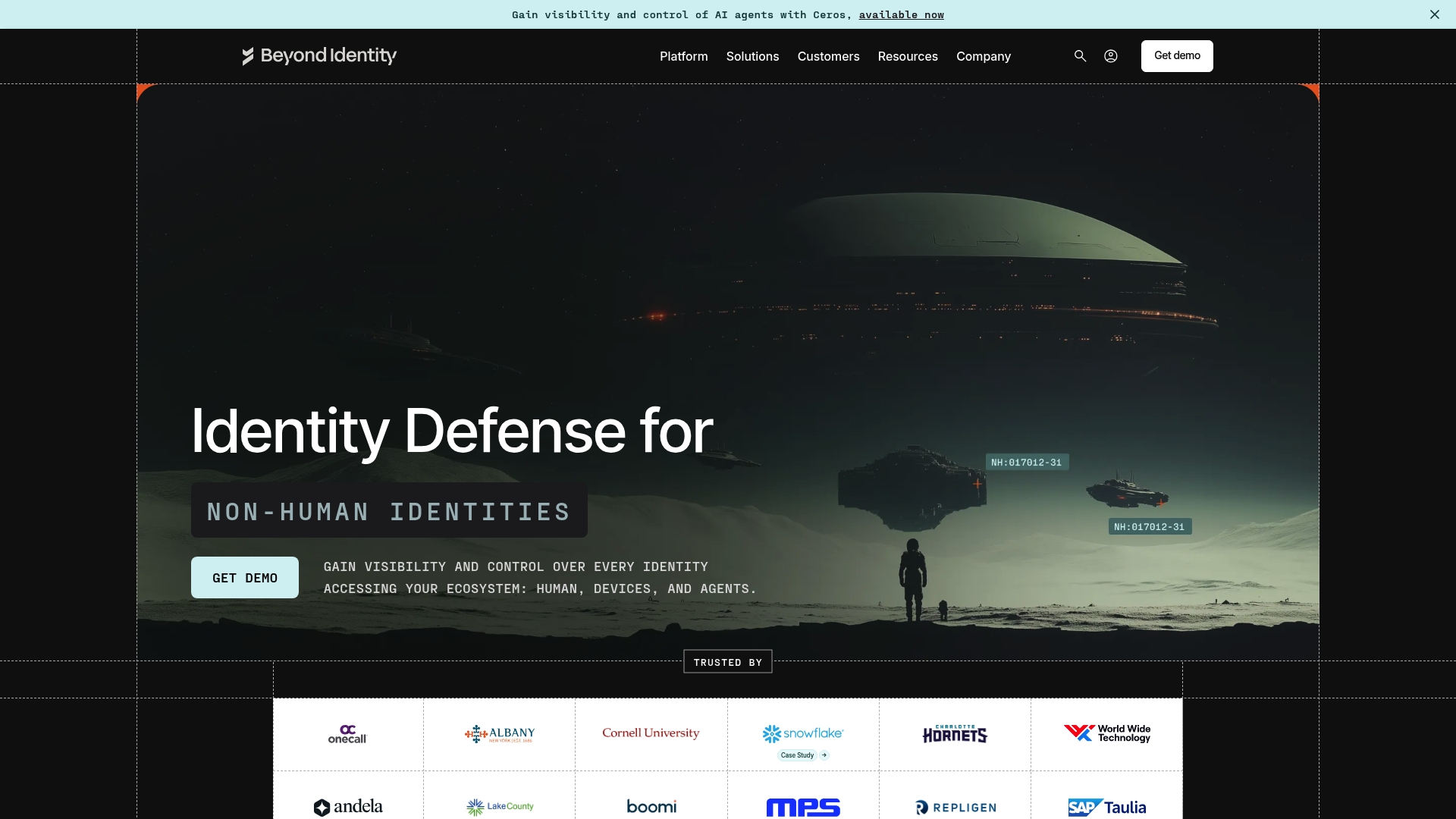
Beyond Identity advertises deepfake detection for meetings and chats as a built-in capability. The platform also ties each login cryptographically to a device. That combination targets both credential theft and manipulated audio or video attacks.
Core Features
The product delivers passwordless authentication that cryptographically binds a user identity to a single device. It runs real-time device health and posture checks across managed and unmanaged endpoints and applies risk-based access decisions. The platform also supports non-human identities with cryptographic binding and posture verification for AI agents.
Key Differentiator
Beyond Identity’s standout capability is cryptographic binding of identity to device plus continuous posture verification. That model shifts access control from passwords to device identity and live telemetry for zero trust style access decisions.
Pros
Beyond Identity removes passwords and replaces them with cryptographic device keys, which reduces opportunities for credential theft. The continuous posture checks let you apply conditional access policies to both managed and unmanaged devices. The product also includes tools to protect AI agents and detect manipulated media, which expands coverage beyond human logins and strengthens controls for emerging attack vectors.
Cons
- Limited long-term public reviews compared to legacy identity providers, which can make risk assessments harder.
- The passwordless, device-centric model often requires organizational and cultural changes for operations and help desk teams.
- Pricing is quoted per environment and requires a vendor quote, which can slow procurement for teams that need transparent list pricing.
When It May Not Fit
If your organization prefers transparent list pricing for fast procurement, this product may not match that need. If teams lack bandwidth to change onboarding and endpoint workflows, adoption will be slower. Buyers who require long public track records from legacy vendors should factor that into vendor selection.
Notable Integrations
Beyond Identity lists integrations with major security and identity tools. Key connectors include CrowdStrike, AWS, and Jamf. It also integrates with Auth0, BeyondTrust, Bitbucket, and Citrix for risk signals and access orchestration.
Who It’s For
The product fits large enterprises and security teams that want modern, passwordless, device-centric authentication. It suits organizations adopting zero trust controls and those securing both human and machine identities. Security teams with existing endpoint tooling will find the integrations useful.
Real World Use Case
A global enterprise used Beyond Identity to replace password resets with device-bound authentication. The deployment enforced device posture for remote access and reduced help desk workload for password support. That setup also extended protections to service accounts and AI agents.
Pricing
Pricing is provided on a quote basis and varies by environment and deployment needs. Contact the vendor to request a proposal and deployment estimate.
Website: https://beyondidentity.com
OneLogin
At a Glance
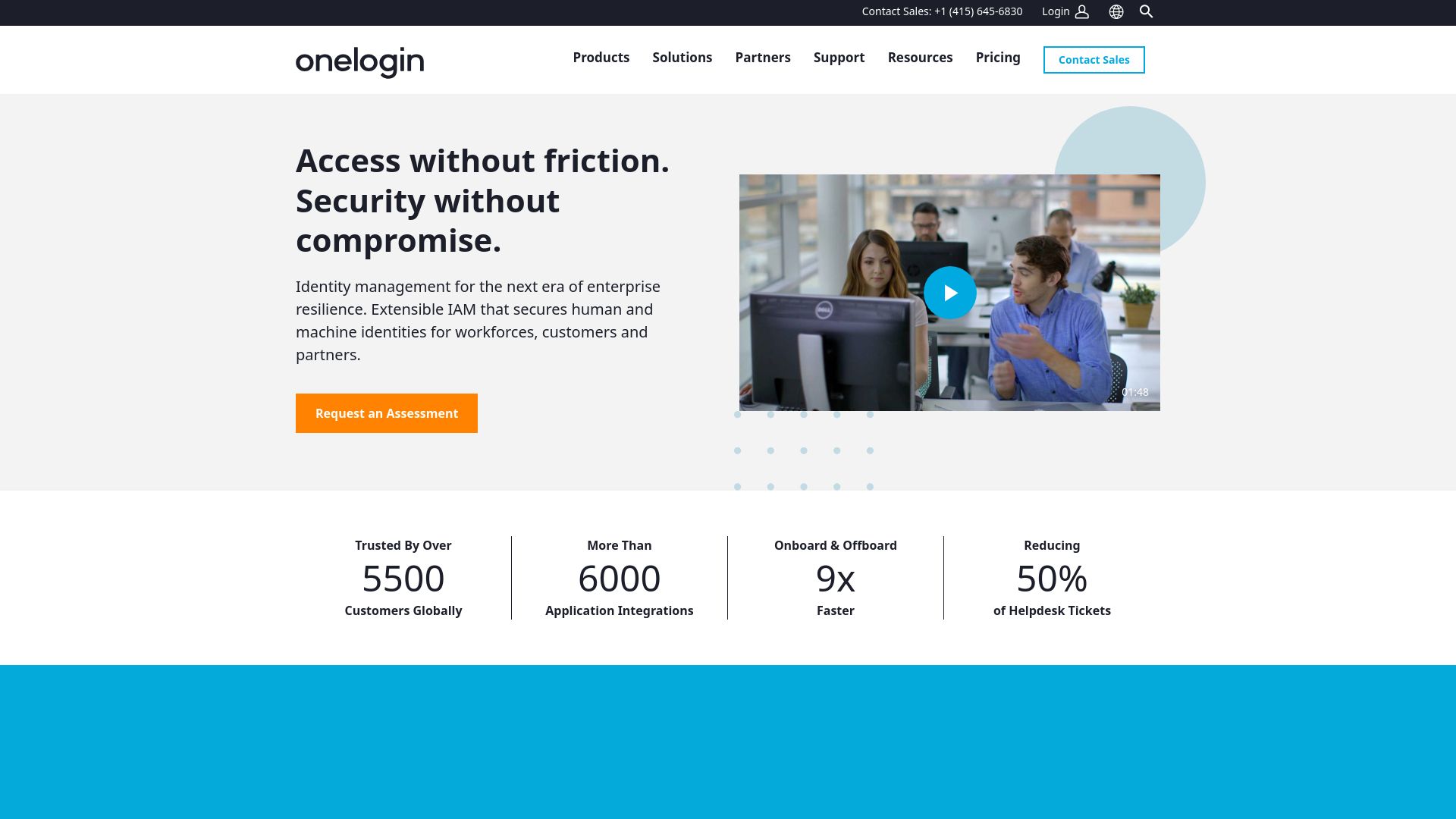
OneLogin’s marketing materials state a catalog of more than 6,000 pre integrated apps. That catalog reduces custom integration work for large application estates and speeds onboarding. The platform combines single sign on, multi factor authentication, and AI driven risk detection for enterprise access control.
Core Features
OneLogin provides SSO for cloud and on premises applications and integrates with Active Directory, LDAP, and G Suite. Its MFA supports one time passwords, biometrics, and risk based adaptive authentication through SmartFactor Authentication and Vigilance AI. The product also includes user provisioning, lifecycle management, and extensible APIs for custom workflows.
Key Differentiator
A very large pre integrated application catalog paired with AI powered adaptive authentication sets OneLogin apart. That approach reduces the need for bespoke connectors and lets access policies react to real time risk signals. For environments with many SaaS and legacy apps, the model shortens deployment tasks and centralizes policy control.
Pros
OneLogin’s MFA integrates tightly with SSO so users authenticate once while secondary checks apply where risk increases. Self service password reset and role based policies lower helpdesk volume and speed onboarding and offboarding. The cloud directory and provisioning capabilities support large account lifecycles while AI features help surface suspicious access patterns.
Cons
- Advanced configuration can be complex and often requires vendor or third party support to implement fully.
- Documentation and support quality vary and response times can be slow for complex enterprise issues.
- Administrative tools lack depth for a few highly specialized enterprise workflows.
When It May Not Fit
If your environment requires deep custom connectors or unusual administrative workflows, OneLogin can add project overhead during deployment. Teams that need consistently rapid, high touch support for complex customization may find the support model uneven. Small teams seeking a minimal configuration footprint may prefer a lighter identity tool.
Who It’s For
Large organizations that must centralize workforce and customer identity across global operations will find the platform aligned with their needs. Security teams that need adaptive MFA and policy driven access control benefit from the risk based controls. Companies planning to consolidate multiple directories into a single cloud directory will also match this profile.
Real World Use Case
According to the company, a multinational reduced onboarding time by 80% after centralizing access with OneLogin. That change cut repetitive account setup tasks and lowered password reset volume. Security teams applied risk based policies to tighten access without adding user friction.
Pricing
Pricing is available by request or consultation and follows a typical enterprise software subscription model. Proposals are based on user counts, required features, and support levels. OneLogin does not publish standard public pricing on its website.
Website: https://onelogin.com
SurePassID
At a Glance
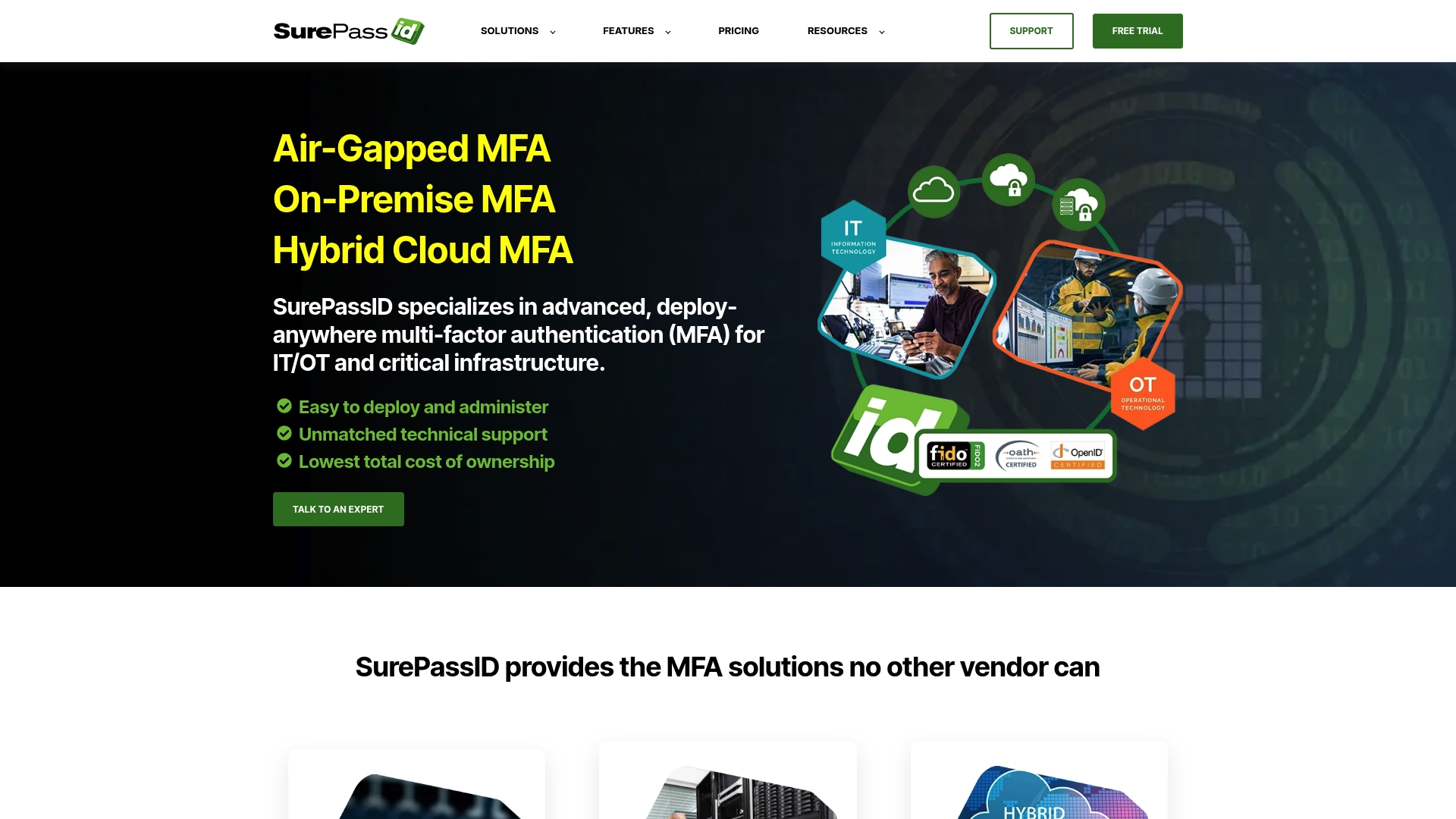
Deploys in air gapped, on premise, hybrid cloud, and public cloud environments while supporting MFA as Code automation. The platform targets critical infrastructure and claims support across defense, healthcare, government, energy, and utilities. That industry reach pairs with an explicit focus on regulatory compliance and zero trust principles.
Core Features
SurePassID supports both phishing resistant methods such as FIDO2, PIV, and X.509 and nonphishing methods like OATH TOTP and mobile push. It handles Windows, MacOS, Linux, RDP, SSH, and offline two factor scenarios, and connects to directory and federation layers through SAML2, OIDC, RADIUS, LDAP, TACACS plus, and API. Deployments run on virtual machines, containers, infrastructure as code, public or private cloud, or embedded systems, and include directory sync, log management, tiered architectures, and hardware token support.
Key Differentiator
The standout capability is deployment flexibility across air gapped and on premise installations while also supporting cloud and MFA as Code workflows. That makes the product suited to organizations that must meet strict data sovereignty or export control rules. The vendor pairs this with a compliance oriented feature set aimed at audit and logging needs.
Pros
Deployment options cover air gapped sites, on premise data centers, hybrid clouds, and public cloud, which reduces architectural compromise for high assurance customers. The product explicitly supports legacy and OT endpoints, so it can protect SCADA and industrial systems that many newer MFA solutions do not. High availability and secure logging help meet audit and compliance requirements, and the vendor advertises dedicated technical support for mission critical rollouts.
Cons
- Limited independent third party review coverage makes outside verification of claims harder to find.
- Pricing varies by deployment type and scale, which can complicate procurement for teams with fixed budgets.
- Case by case integration checks may be required for unusual legacy or bespoke systems.
When It May Not Fit
If you need a lightweight, fully managed cloud service with minimal on premise work, this product may be more than you need. Organizations that require broad public third party validation before procurement will face a documentation gap. Small teams without systems engineering capacity may struggle with air gapped or on premise deployments.
Notable Integrations
- SAML2 for SSO and federation
- OIDC for modern identity flows
- RADIUS and TACACS plus for network device authentication
- LDAP and directory sync for user stores
- API access for automation and custom integrations
Who It’s For
Organizations requiring high assurance MFA for IT, OT, or critical infrastructure will get the most value. Typical buyers include defense contractors, government agencies, utilities, and large healthcare providers. Managed service providers running customer environments with strict compliance needs will also find the deployment options relevant.
Real World Use Case
A defense contractor deployed air gapped MFA across several secure facilities to meet export control and data sovereignty rules. The implementation protected legacy workstations and isolated networks while providing centralized logging for audits. That deployment model kept sensitive systems offline while still enforcing phishing resistant authentication.
Pricing
SurePassID’s marketing materials list on premise MFA at $60/user/year, MFA as Code at $60/user/year, and cloud MFA at $48/user/year, all billed annually. Those rates are presented as examples. Final pricing depends on deployment scale and chosen options and typically requires vendor consultation.
Website: https://surepassid.com
Comparison of alternatives
Advanced functionality targeting secure banking workflows differentiates SQR400 from its competitors. By comparing key dimensions such as integration versatility, public sector adaptability, and simulation capabilities, organizations can identify the solution that best fits their needs.
Integration Versatility
Okta excels in facilitating integrations within complex enterprise environments. Its Integration Network simplifies app connectivity, reducing time-intensive customization efforts often necessary during mergers or expansions. Security teams benefit from centralized directories that reduce redundancies and simplify user lifecycle management at scale. This level of integration comprehensiveness is less prominent in the alternatives reviewed.
Public Sector Adaptability
RSA SecurID offers a proven track record for secure deployments within high-assurance areas, such as government agencies needing stringent authentication controls. Its support for hybrid and on-premise setups allows firms to maintain strict jurisdictional and compliance demands. Compared to newer entrants like Beyond Identity, RSA SecurID favors stability and adherence to established protocols over rapid cloud-centric rollouts.
Best fit
- Teams requiring advanced transaction simulation, especially real fund transfers via MT103, should select SQR400.
- Organizations prioritizing integration breadth for diverse application ecosystems will find Okta advantageous.
- Public sector agencies and enterprises with strict token management needs should opt for RSA SecurID.
- Buyers needing infrastructure-wide compliance across decentralized and air-gapped systems will benefit most from SurePassID.
Our pick
SQR400 uniquely provides built-in MT103 transaction simulation that includes stealth techniques and real fund transfer capabilities. For testing workflows involving complex banking validations, it leads the category. If integration or token-based identity governance holds greater importance to your operations, reviewing alternatives such as Okta or RSA SecurID remains a valid path forward.
For businesses and security teams seeking robust authentication and identity management solutions, this comparison focuses on key features, differentiation, and pricing information for selecting the best fit.
| Solution | Primary Use Case | Key Differentiator | Pricing | Notable Limitation |
|---|---|---|---|---|
| Sqr400flashfund | Secure banking simulation tools | MT103 wire transfer support | $1,200–$2,500 | Regulatory and compliance implications |
| Okta | Enterprise identity management | Broad integration network | Price not published | Higher cost for smaller organizations |
| RSA SecurID | High-assurance authentication | Proven stability and governance | Price not published | Logistical overhead with hardware tokens |
| Beyond Identity | Passwordless authentication | Cryptographic device binding | Price not published | Limited public reviews |
| SurePassID | Compliance-focused MFA solutions | Flexible deployment options | $48-$60/user/year | Limited third-party integration validation |
Challenges in Choosing the Best MFA Providers and How Sqr400flashfund Offers a Reliable Solution
Security professionals and auditors face challenges when selecting MFA providers because trust and payment risk are common concerns. Many solutions promise security but add costs or complexity without letting you validate the product firsthand. Sqr400flashfund solves this by offering a zero-risk payment model with EscrowVault, allowing you to confirm the software works on your machine before you pay.
With over 50,000 users and a 99.7% success rate, Sqr400flashfund supports advanced MT103 wire transfers and stealth security features. This blend of reliability, military-grade protection, and expert support helps security teams test real transaction workflows without exposure to fraud.
See how Sqr400flashfund can strengthen your testing tools and reduce procurement risk. Visit Sqr400flashfund to learn more and verify the software on your system before committing.
FAQ
How does Sqr400flashfund support MT103 wire transfers?
Sqr400flashfund offers built-in MT103 support that enables real fund transfers while masking attribution with stealth techniques. This capability shifts testing from simulated transfers to live workflow validation for transaction processing chains. Security teams looking to validate end-to-end settlement behavior should consider using Sqr400flashfund’s features.
What is the difference between Sqr400flashfund and Okta?
Okta provides a comprehensive identity and access management solution for enterprises, focusing on centralized identity control across cloud and on-premise systems. Sqr400flashfund addresses a different need by enabling real fund transfers with stealth techniques, making it suitable for security professionals and testers who require validation of transaction processing chains.
Which platform offers escrow payment options?
Sqr400flashfund includes an escrow payment model called EscrowVault, allowing users to confirm functionality before releasing payment. This feature reduces upfront payment risk, making it more appealing for buyers evaluating high-cost tools.
Can I use Sqr400flashfund for security testing?
Yes, Sqr400flashfund is designed for security professionals and testers who need to validate real transfer behavior. This software enables advanced testing capabilities, making it suitable for controlled security testing environments where real funds are involved.
What unique features does Sqr400flashfund provide?
Sqr400flashfund features fake bank alerts and OTP bypass modules, allowing users to conduct comprehensive testing of their security protocols. These features enhance the user experience during risk assessments, providing practical tools for verification and validation.